
Seven Tank Process Chemicals
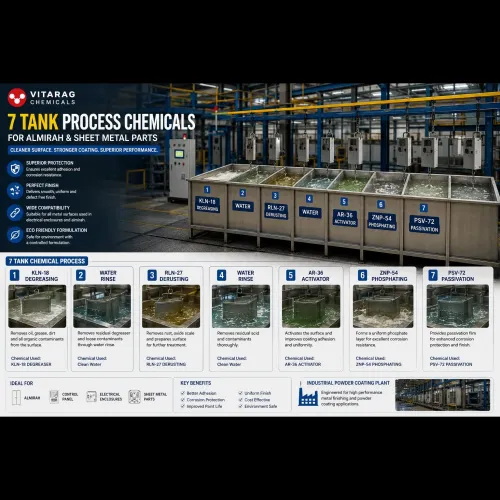
- The Seven Tank Process is a standard procedure for pre-treatment of metal surfaces before painting or coating. This process involves a sequence of chemical treatments to clean, degrease, and provide a protective layer to ensure proper adhesion of the subsequent coatings. Here is an overview of the typical seven stages and the chemicals used in each:
1. Degreasing (Alkaline Cleaning):
. Chemicals: Alkaline degreasers or detergents
. Purpose: Remove oil, grease, and other contaminants from the metal surface.
2. Water Rinse:
. Chemicals: Freshwater
. Purpose: Rinse off the alkaline residues from the degreasing stage.
3. Pickling (Acid Cleaning):
. Chemicals: Dilute acids (usually phosphoric acid or sulfuric acid)
. Purpose: Remove rust, scale, and oxides from the metal surface.
4. Water Rinse:
. Chemicals: Freshwater
. Purpose: Rinse off acid residues from the pickling stage.
5. Surface Activation:
. Chemicals: Titanium or zirconium-based activators
. Purpose: Prepare the metal surface for better phosphate coating adhesion.
6. Phosphating:
. Chemicals: Phosphating solution (usually zinc, iron, or manganese phosphates)
. Purpose: Form a protective phosphate layer on the metal surface to enhance paint adhesion and provide corrosion resistance.
7. Passivation / Chromate Treatment:
. Chemicals: Chromate or non-chromate passivation solutions
. Purpose: Further enhance corrosion resistance and prepare the surface for final coating.