
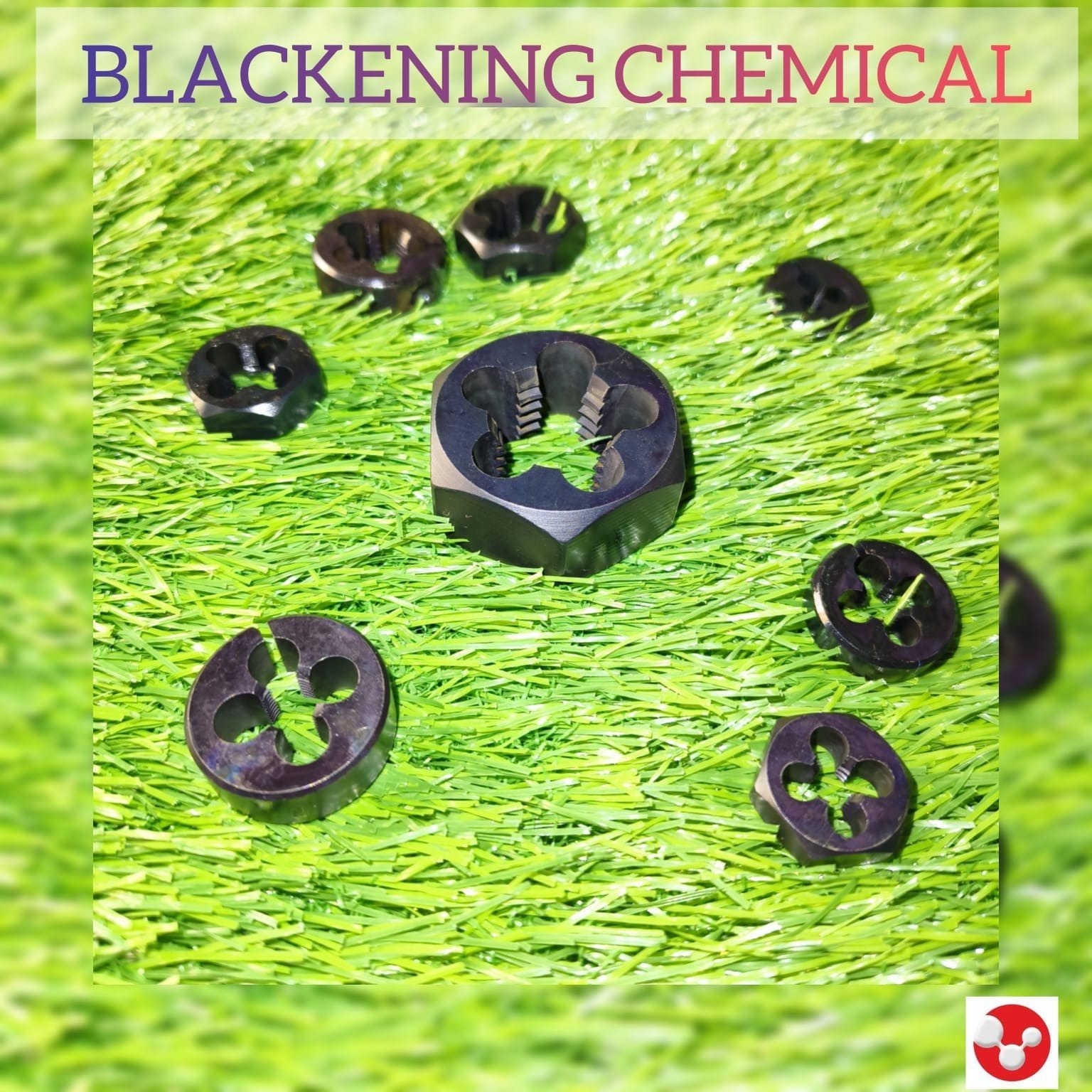
What’s the difference between hot and cold blackening?
Hot blackening uses heated alkaline conversion baths (forms true Fe₃O₄ oxide; durable). Cold blackening is room-temperature chemistry that deposits a surface film (less durable, easier for touch-ups).
* Hot Blackening (Hot Black Oxide)
Temperature: ~135–150 °C (285–300 °F).
Chemistry: Strong alkaline salts (NaOH + nitrates/nitrites).
Reaction: Converts the steel surface to magnetite (Fe₃O₄).
Coating: Dense, uniform, deep black.
Durability: High — strongly bonded oxide, very thin (no dimensional change).
Corrosion resistance: Good, especially when sealed with oil or wax.
Applications: Tools, firearms, automotive parts, precision machinery.
Cons: Requires heated tanks, fume control, higher setup cost.
* Cold Blackening (Cold Black Oxide / Cold Bluing)
Temperature: Room temp (~20–30 °C).
Chemistry: Usually selenium or copper-based acidic solutions.
Reaction: Deposits a black film (not a true oxide conversion).
Coating: Thinner, sometimes uneven, lighter black color.
Durability: Low–medium — can wear or rub off.
Corrosion resistance: Poor unless oiled regularly.
Applications: Small parts, decorative use, touch-ups, DIY kits.
Cons: Less adhesion and protection compared to hot blackening. #Blackening Chemical Manufacturer.