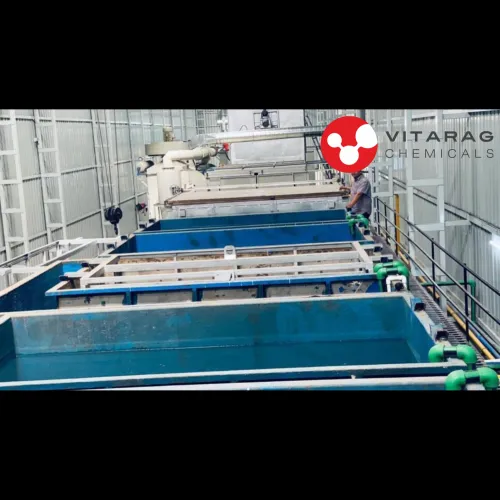

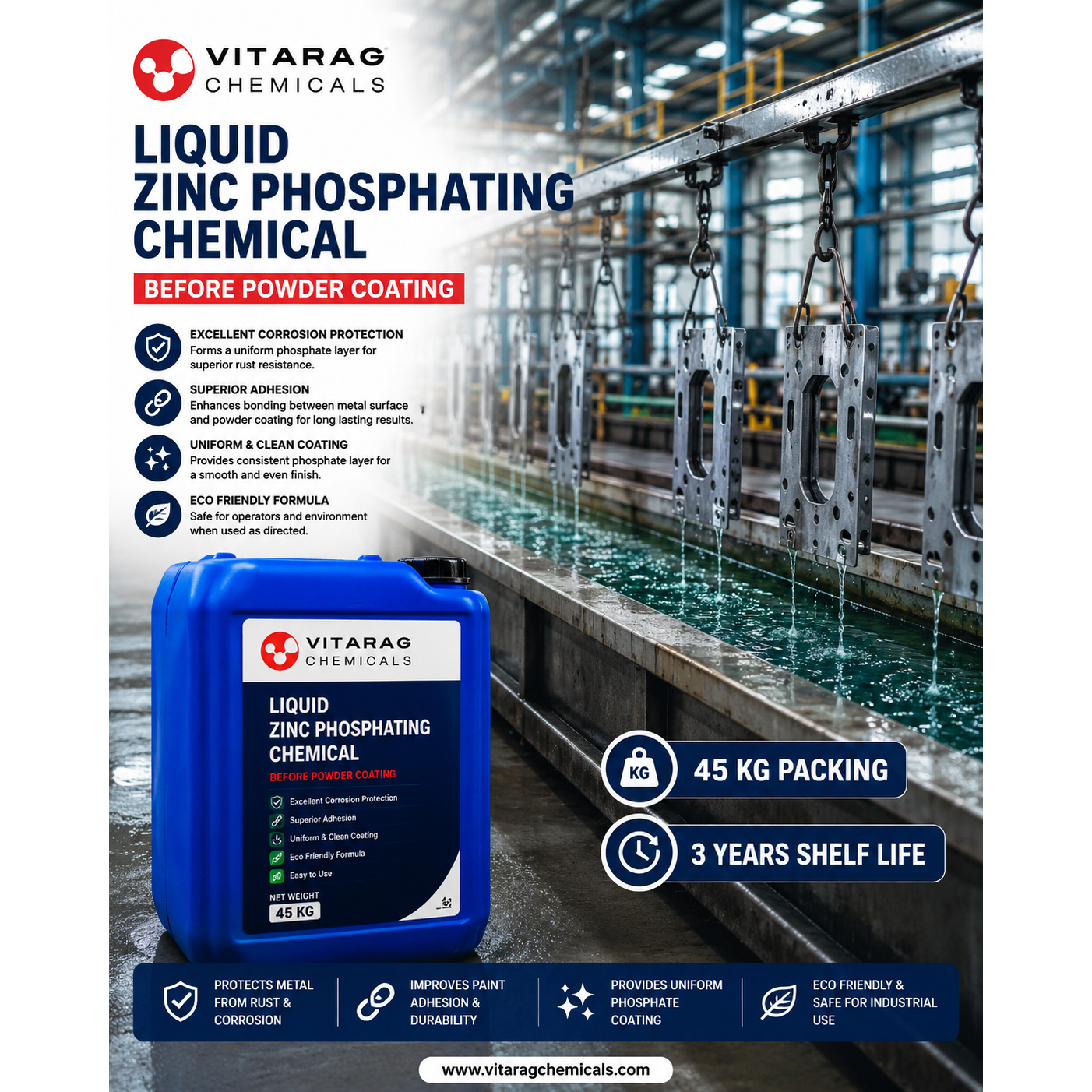
Zinc phosphating is a chemical surface-treatment process used mainly on steel and iron components before painting or powder coating. It creates a thin, crystalline zinc phosphate coating on the metal surface.
1. What is the purpose?
Zinc phosphating provides:
Better paint/powder-coating adhesion
Improved corrosion resistance
A suitable surface for subsequent painting
Reduced risk of paint peeling or blistering
Better surface uniformity.
2. Typical process sequence
A common industrial process is:
Degreasing → Water rinse → Surface conditioning → Zinc phosphating → Water rinse → Passivation → Drying → Painting/powder coating
For example:
Degreasing: Removes oil and grease.
Rinsing: Removes alkaline cleaner.
Activation/conditioning: Produces finer phosphate crystals.
Zinc phosphating: Forms the phosphate coating.
Rinsing: Removes residual chemicals.
Passivation: Improves corrosion resistance.
Drying: Prepares the part for painting.