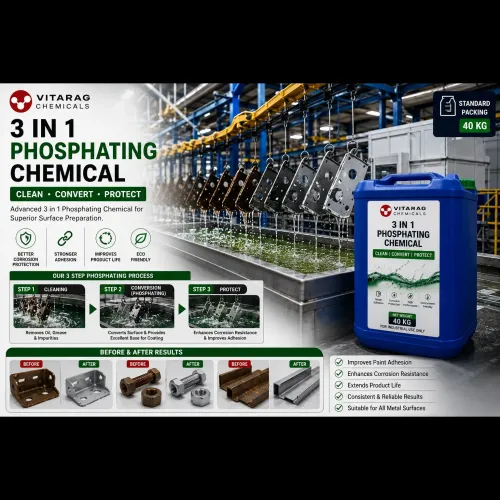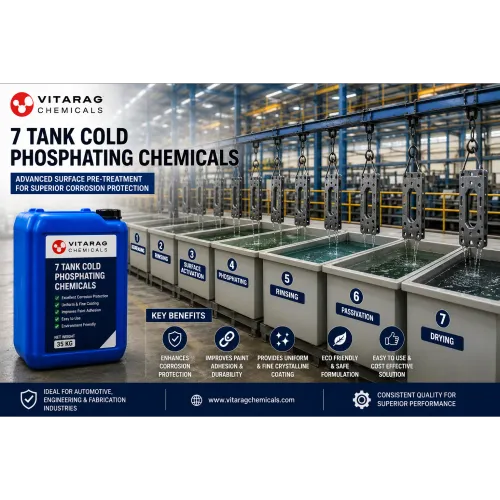

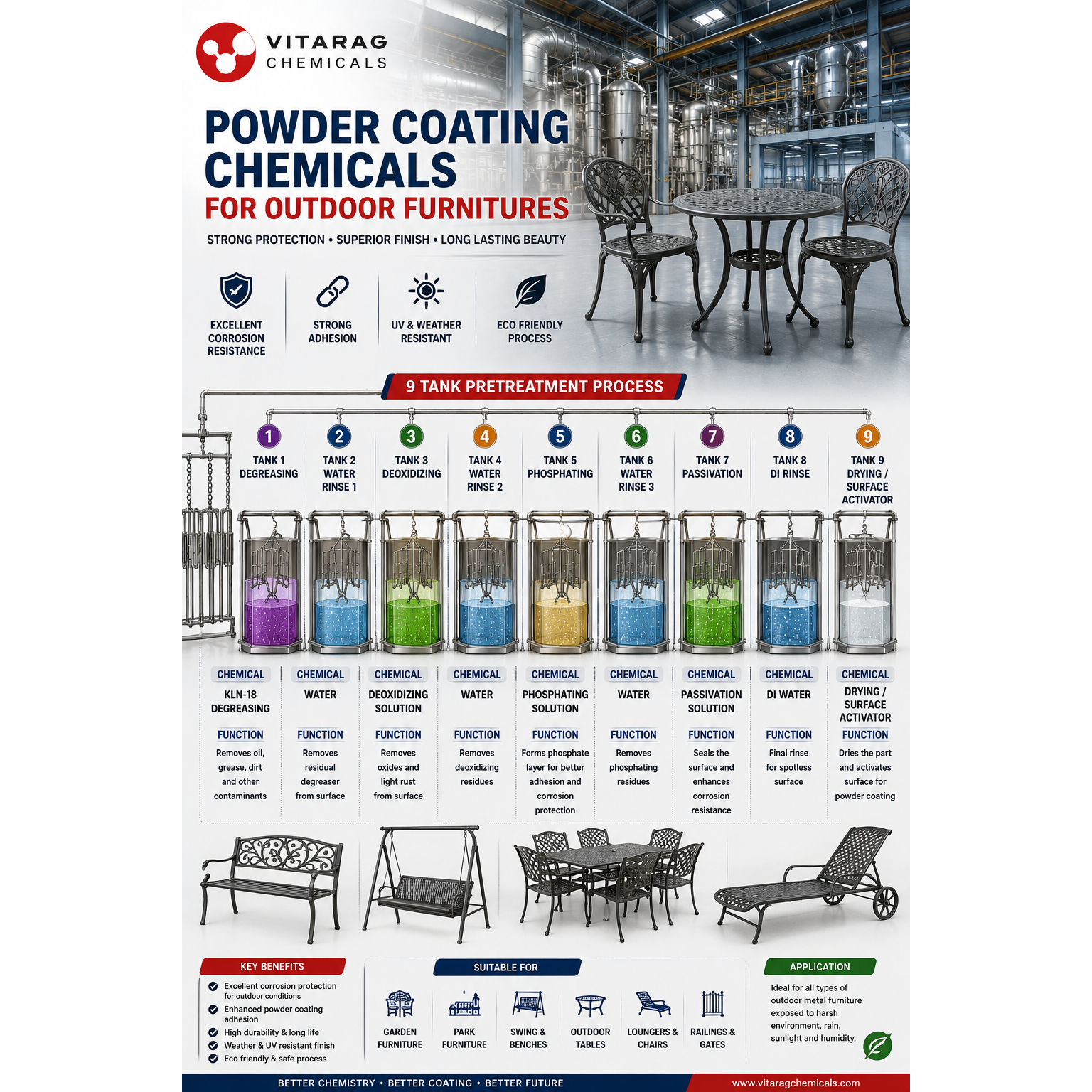
The 7-Tank Phosphating Process is an advanced metal pretreatment system designed to prepare mild steel almirah and sheet metal components before powder coating or painting. This process effectively removes oil, grease, dirt, rust, and oxide scales from the metal surface while creating a protective phosphate coating that enhances paint adhesion and corrosion resistance.
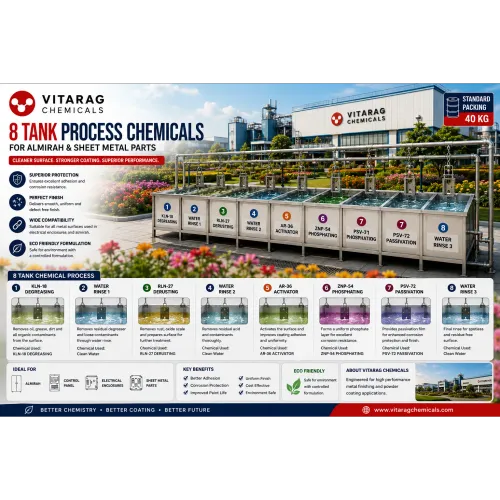
- During the treatment, metal parts pass through seven carefully controlled stages including degreasing, water rinsing, de-rusting, activation, phosphating, passivation, and final rinsing. The phosphating stage forms a microscopic crystalline phosphate layer on the metal surface, which acts as a strong bonding base for powder coating.
* Key Benefits
Removes oil, grease, rust, and surface contaminants
Improves powder coating and paint adhesion
Enhances corrosion and rust resistance
Provides uniform surface finish
Extends product life and durability
Reduces coating failures such as peeling and blistering
Ensures superior finish quality for almirahs and sheet metal products.
Typical 7-Tank Process Sequence
KLN-18 Degreasing – Removes oil, grease, and dirt.
Water Rinse 1 – Eliminates chemical residues.
RLN-27 De-Rusting – Removes rust and oxide scales.
Water Rinse 2 – Cleans remaining acid residues.
AR-36 Activator – Activates the surface for phosphating.
ZNP-54 Phosphating – Forms a protective phosphate layer.
PSV-72 Passivation – Seals the phosphate coating and improves corrosion resistance.
Applications
* The 7-Tank Phosphating Process is widely used for:
Steel Almirahs
Office Furniture
School Furniture
Control Panels
Electrical Enclosures
Sheet Metal Components
Fabricated Steel Products
- Result: A clean, corrosion-resistant, and properly conditioned metal surface that delivers excellent powder coating adhesion, long-lasting protection, and a premium finish.