
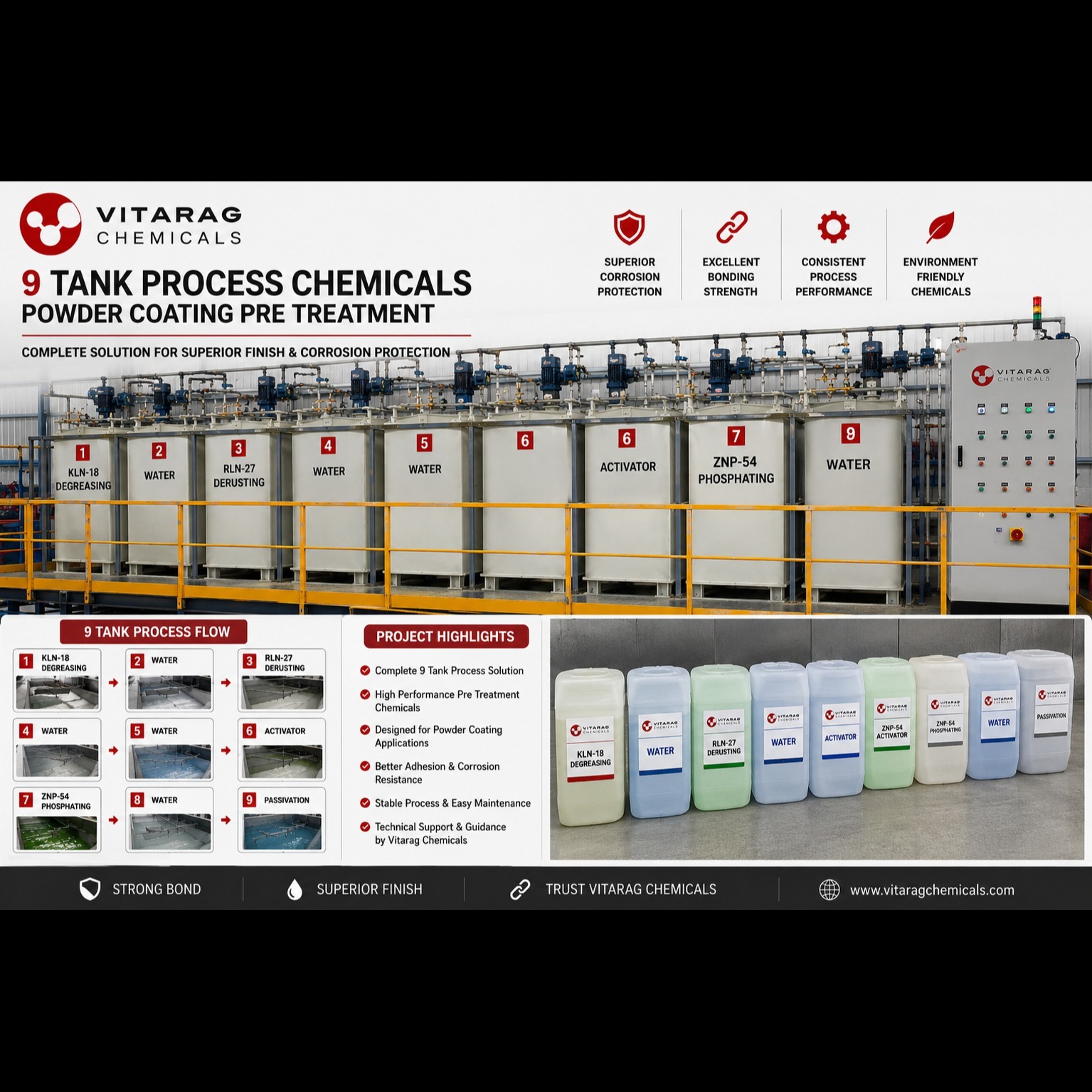
A 9-tank pretreatment system is a multi-stage cleaning and conversion-coating process used before powder coating. It provides excellent adhesion, corrosion resistance, and coating durability, especially for steel products intended for outdoor or industrial use.
* Typical 9-Tank Sequence
Tank Process Purpose
1 Degreasing Removes oil, grease, dirt
2 Water Rinse 1 Removes cleaner residue
3 Water Rinse 2 Improves cleanliness
4 Derusting / Pickling Removes rust and scale
5 Water Rinse Removes acid residue
6 Zinc Phosphating Forms protective conversion coating
7 Water Rinse Removes phosphate residues
8 Passivation / Sealing Enhances corrosion resistance
9 DM Water Rinse Final clean rinse before drying.
* Tank 1 – Degreasing
- Chemical: Alkaline cleaner/degreaser
* Removes:
-Cutting oils
Grease
Dust
Shop contaminants.
* Tank 2 & 3 – Water Rinses
- Remove carryover cleaner and prevent contamination of later tanks.
* Tank 4 – Derusting (Pickling)
- Chemical: Acid-based derusting solution
* Removes:
Rust
Mill scale
Oxides.
* Tank 5 – Water Rinse
- Prevents acid contamination of the phosphate bath.
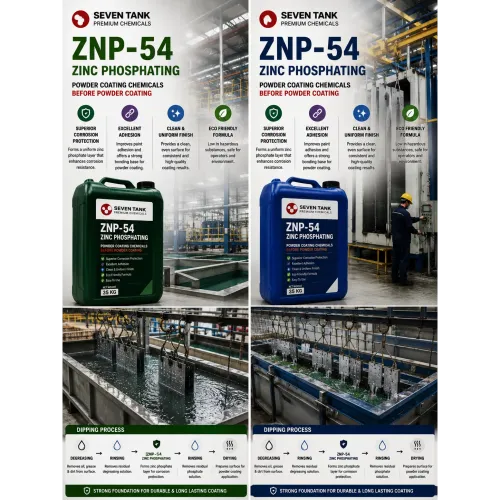
* Tank 6 – Zinc Phosphating
- Chemical: Zinc phosphate solution
* Creates a crystalline phosphate layer that:
Improves powder adhesion
Increases corrosion resistance
Provides a uniform coating surface
* Tank 7 – Water Rinse
- Removes unreacted phosphate chemicals.
* Tank 8 – Passivation
- Chemical: Passivating sealer (often chromium-free in modern systems)
* Benefits:
Seals phosphate pores
Improves salt-spray resistance
Enhances coating durability
Tank 9 – DM Water Rinse
- DM (Demineralized) water minimizes mineral deposits and water spots before drying.